Entrepreneurship in Qatar
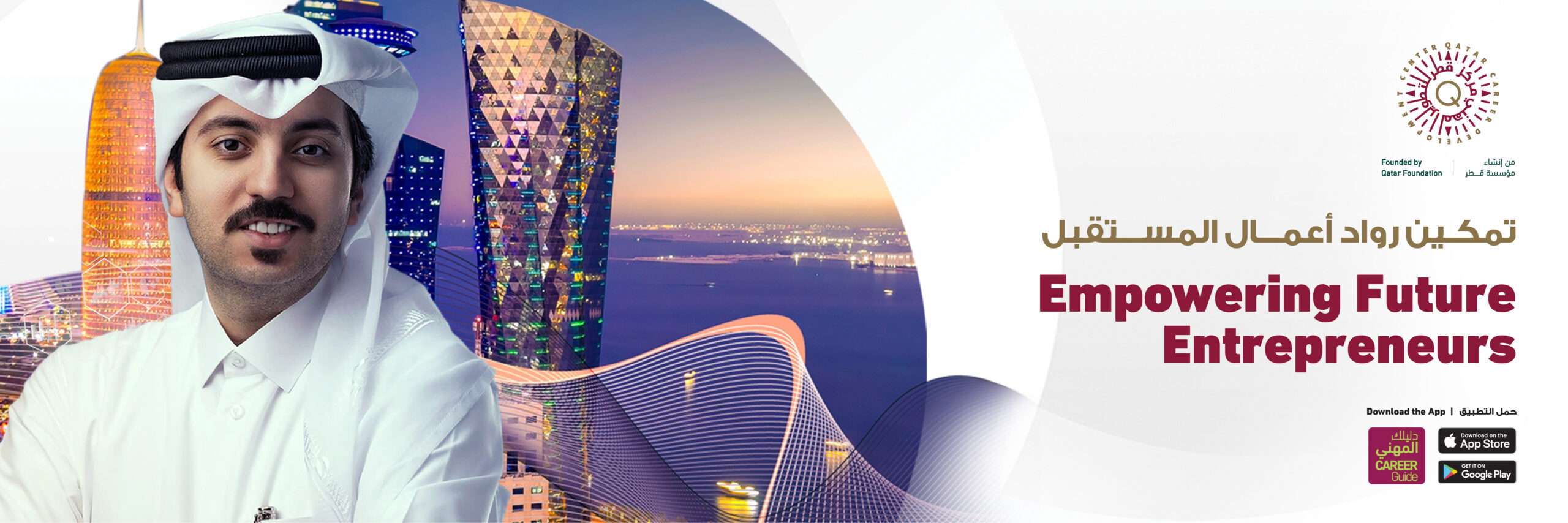
Steady Steps & Bright Horizons
A conversation with Abdulrahman Al Emadi Vice President Young Entrepreneurs Club
Over the past few years, Qatar’s entrepreneurship landscape has grown remarkably; fueled by clear public policies and a strong government-wide commitment to building a knowledge-based, diversified, and sustainable economy. Today, that support is reflected in a well-integrated ecosystem that spans schools and universities, awareness and mentoring programs, streamlined business set-ups, improved access to finance, and structured pathways into local and regional markets. The results are evident: Qatar now ranks among the world’s leading entrepreneurial ecosystems, placing 11th globally on the 2024–2025 Global Entrepreneurship Monitor index.
A Bold Initiative with Real Impact
Amid Qatar’s growing entrepreneurship ecosystem, the Young Entrepreneurs Club (YEC) has emerged as a standout national initiative. What began as a volunteer youth effort quickly produced outsized results—earning official recognition in 2022.
Today, the Club works to reach the widest possible pool of aspiring entrepreneurs, connect them with real-world business contexts, and help them learn directly from experienced founders. Through workshops, bootcamps, and networking events, YEC builds skills, opens doors to finance and markets, and helps transform ideas into viable ventures.
In this issue, we sit down with Abdulrahman Tareq Al Emadi, an entrepreneur since 2018 and the Club’s Vice President, to explore how YEC is empowering Qatar’s next generation of innovators and what the ecosystem needs next.
How did the Young Entrepreneurs Club get started?
We began as a grassroots youth initiative, bringing together like-minded aspiring founders to exchange experiences. As the effort grew, the Club was formally established under the Ministry of Sports and Youth, with strong support from the Ministry of Commerce and Industry, Qatar Development Bank (QDB), and Qatar Chamber. That institutional backing gave us a solid platform to help young people navigate the entrepreneurship landscape and enter it with confidence. The Ministry’s role was a turning point for the national entrepreneurship journey.
Where does the Club sit within Qatar’s current ecosystem?
Thanks to strategic partnerships with QDB, Qatar Chamber, and ‘Snoonu,’ the Club now operates as a semi-public, non-profit platform where creativity and innovation meet opportunity. We serve as a bridge between youth and founders on one side, and regulators and enablers on the other—closing gaps, speeding up learning, and channeling support to where it has the most impact.
What sets your programming apart from other entrepreneurship initiatives?
We’re built by entrepreneurs, for entrepreneurs. We understand the real needs of first-time founders and design programs grounded in practice, not theory. We extract lessons directly from the field so youth can learn from our success and avoid making the same early-stage mistakes. It’s peer-to-peer, practical, and focused on execution.
Is Club membership open to everyone?
Official membership is for those with a commercial registration, but our activities are open to all youth, citizens and residents, without prerequisites. Anyone interested in entrepreneurship can join our events and training and tap into our services in Qatar and abroad. Inclusivity is central to our mission.
Have you met your targets for the first three years?
We’ve exceeded them. Thousands of young people have benefited from our workshops and summer bootcamps. Since launch, we’ve run around 50 interactive training workshops and three summer camps serving about 1,000 participants, most recently the Innovation Summer Camp 2025 in July. In parallel, we provided direct support to roughly 2,600 participants, showcasing their projects at dedicated platforms within conferences and forums and helping them develop further.
Every forum we’ve joined became a networking hub where youth connected with dozens of organizations and discovered standout job opportunities. We also built a partnership network of 36+ local and international entities and launched ‘yec.qa’ to offer global entrepreneurial resources.
How do you assess Qatar’s entrepreneurship environment today?
The trajectory is positive. Over the past two decades, policy and institutional efforts have created strong foundations—incubators and accelerators, finance and advisory programs, and enabling infrastructure. That said, we still need to double down on easier access to regional and international markets and continue nurturing a bolder venture-investment culture nationally.
What would unlock more tech startups?
Three levers: Research and Development (R&D) support that helps founders move from prototype to product; agile regulation that allows sandboxing and testing new business models; and deeper public-private partnerships to scale promising solutions globally.
Is there momentum beyond tech?
Absolutely. The green economy, renewable energy, and creative industries are high-potential spaces aligned with Qatar National Vision 2030. They offer meaningful opportunities for youth to launch ventures that deliver both value and impact.
What common mistakes do first-time entrepreneurs make?
Rushing to launch without a rigorous feasibility study or real market insight. There is too much focus on “the idea” and neglect of unit economics and operations, which are both critical to building something that lasts
What’s your core advice for aspiring entrepreneurs?
- Solve a real market problem; don’t chase ideas that only sound good.
- Find a strategic co-founder or mentor who’s been through this before.
- Build local and regional networks; opportunities are born from relationships.
- Invest in continuous learning; it compounds like interest.
What’s next for the Young Entrepreneurs Club?
Progress, for us, is proof of growth, not an endpoint. We aim to broaden our reach, expand digital delivery, and step up support for early-stage and green startups. We’re anchoring Qatar’s position as a regional entrepreneurship hub in line with QNV 2030. Practically, that means growing partnerships, improving access to finance and markets, elevating the quality of training and mentorship, and measuring our impact consistently so we keep getting better.