City Pulse
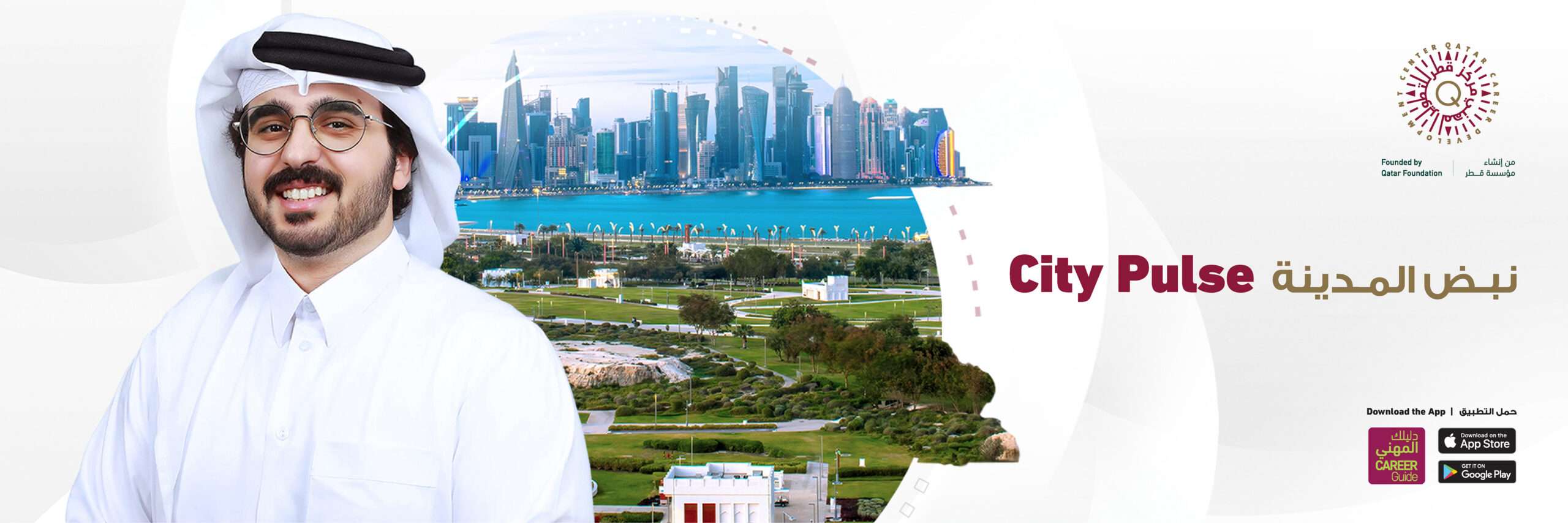
AbdulRahman Al-Mana
The young Qatari reimagining urban planning
When it’s time to choose a major, many students in Qatar reach for the familiar: medicine, engineering, business, education, the military. Prestige, family expectations, and the promise of job security all play a part, along with limited awareness of other high-impact paths. And yet, every so often, a story breaks the mold.
At the second ‘Earthna Summit’ in Msheireb, we met AbdulRahman Hamad Al-Mana, one of the most compelling young voices in urban planning. In recent years, he’s become a recognizable face—and an ambassador—for a field that quietly shapes our lives.
The session he moderated, “Future-Ready Cities: Smart, Sustainable, and Livable,” made his passion unmistakable as he conversed with his guests on how to mend the broken link between nature and the city. What follows is his journey, his lens on the city, and his mission to put urban planning where it belongs: at the heart of national development.
Finding the spark
Al-Mana grew up alongside Qatar’s building boom: a curious kid watching desert turn into districts, scaffolding into skylines. Early on he wondered: Who draws the outlines of a city? How do we grow without losing our identity?
Even so, the classic routes, such as architecture, civil or structural engineering, did not quite click. Then, in a high-school geography class, a documentary on adaptive reuse in New York lit a fuse. He dove into books and articles and discovered a field that blended design with society: urban planning.
The connection stuck. “At first, my parents were hesitant—it was an unusual choice,” he recalls. “They wanted something stable and clearly defined. But as they saw how deeply I cared about cities and community, and how strongly I believed planning can improve people’s lives, concern turned into full support. They stood by me every step of the way and celebrated every milestone.”
A vision takes shape
In 2016, Al-Mana graduated from Qatar Academy – Doha and headed to the College of Architecture, Art, and Planning at Cornell University, earning a B.A. in Urban and Regional Studies with a minor in Middle Eastern Studies. The degree reframed the city for him, not as a map, but as a living system where people, place, and policy constantly interact.
“I found in planning a beautiful mix of social and economic studies with design and engineering,” he says. “The planner is the starting point, the one who sets the framework within which civil, structural, and architectural work happens. We decide where to build, what to build, and why. Planning isn’t just a job; it’s a responsibility to both society and place.”
Back in Qatar, he joined the Ministry of Municipality as an urban planner. Over four years, he updated zoning and land-use plans, reviewed master plans for major projects, and refreshed design and planning codes. He later led the Spatial Plans Unit, overseeing municipal-scale masterplans and large developments across the country.
One of the toughest hurdles, he says, was the scarcity of young Qatari planners and limited specialization across institutions, often leaving a gap in the “common language” between planning and execution. “It sometimes diluted a fully integrated national vision,” he notes. “I often found myself one of a handful of specialists coordinating with engineers, consultants, and decision-makers from very different backgrounds.”
How did he bridge the gap? By sharpening his negotiation and coordination skills, putting forward data-driven proposals aligned with global best practice, then tailoring them to Qatar’s context. He also took on responsibilities beyond the job description and worked to encourage and mentor young talent into the field.
A milestone to be proud of
Asked about a highlight, he pointed to leading the team that prepared Doha’s submission for the Shanghai Award for Sustainable Cities, organized by UN-Habitat with the City of Shanghai.
“We built a comprehensive case that showcased Doha’s urban sustainability; planning, environmental, and social initiatives, presented in a language global cities understand without losing our local voice,” he says. “It took meticulous coordination and deep analysis of urban and environmental indicators in a very short time. Thanks to the team’s effort, Doha won in the award’s second cycle.”
Representing the ministry, and the country, at the ceremony to receive the award was, he says, “a moment of genuine pride,” and a reminder of Qatar’s growing stature in sustainable urbanism.
What’s next Al-Mana is currently the Head of the Urban Visions & Policy Unit where he helps craft and update national strategies for the planning sector.
Additionally, he was recently appointed as Head of the Urban Studio and Lab (Studio 18), which was established by the Ministry as an innovation and collaboration space for urban planners, engineers, architects, and young researchers. He hopes his path nudges more young people to explore planning, especially as Qatar balances rapid growth with environmental stewardship and quality of life.
Opportunities, he stresses, go well beyond the Ministry of Municipality. Qatar Museums needs people who understand architectural and urban heritage in both urban and rural settings. The Ministry of Transport needs planners for integrated transport systems. The National Planning Council drives policy at the country scale. Private sector consultancies and developers rely on planners across project lifecycles.
“With the rising need for homegrown planning talent,” he says, “we have to invest in preparing a new generation capable of leading the future of Qatari cities. I want to help build that pipeline and create an environment where young planners can bring their ideas to life—faithful to our values and identity.”
More than just maps
Urban planning isn’t “draw lines, write a report, and call it a day.” It’s a knot of disciplines: sociology, economics, geography, geology, ecology, history, architecture, and engineering.
His advice to students: “Be curious, active, and proactive. Don’t stop at the classroom. Attend local and international conferences. Show up, take notes, speak up. Use social media to highlight the urban issues that matter here, like transport, environment, and quality of life. Make sure to join the conversations shaping the future of our cities.”
AI is a partner, not a replacement
With AI changing the future of work, a familiar question looms: will it wipe out certain careers? In urban planning, his answer is clear: no. “As cities grow more complex and datasets explode, planners use AI to make smarter, more informed decisions,” he says. “But planning is ultimately human: it demands cultural and social understanding, a sense of fairness, and the ability to negotiate competing interests. AI still needs thoughtful human direction; to serve people, not just systems, and to keep the city inclusive and just.”
A voice for real change
Al-Mana wants to help mainstream urban planning in Qatar alongside engineering, because it directly shapes quality of life and the direction of growth. “Planners aren’t back-office technicians,” he says. “We’re essential national talent. We’re here to diagnose and fix our ‘urban illnesses’, from weak neighborhood connectivity to transport pain points to projects that miss a sense of place. I want planners in Qatar to get the professional recognition they deserve, and a seat at the decision table, not only at the implementation stage.”
The journey continues
Proud of what he’s achieved, he’s just as clear-eyed about the road ahead. “This journey has let me help shape the contours of the modern Qatari city, balancing growth with a strong sense of place,” he says. “A city isn’t just buildings and streets. It’s an expression of our values and the vision we carry as a society. My role as a planner is to carry that vision and, in my own way, to engineer it into being.”
Info
Urban literacy is your ability to understand and navigate your city smartly and responsibly. It includes knowing how to access municipal and government services (in person and online), understanding how streets, squares, and public facilities are designed and used, and acting safely and respectfully in shared spaces. It also means knowing your rights and responsibilities as a resident and taking part in improving your neighborhood, protecting the environment, and elevating quality of life for everyone.