Genomics
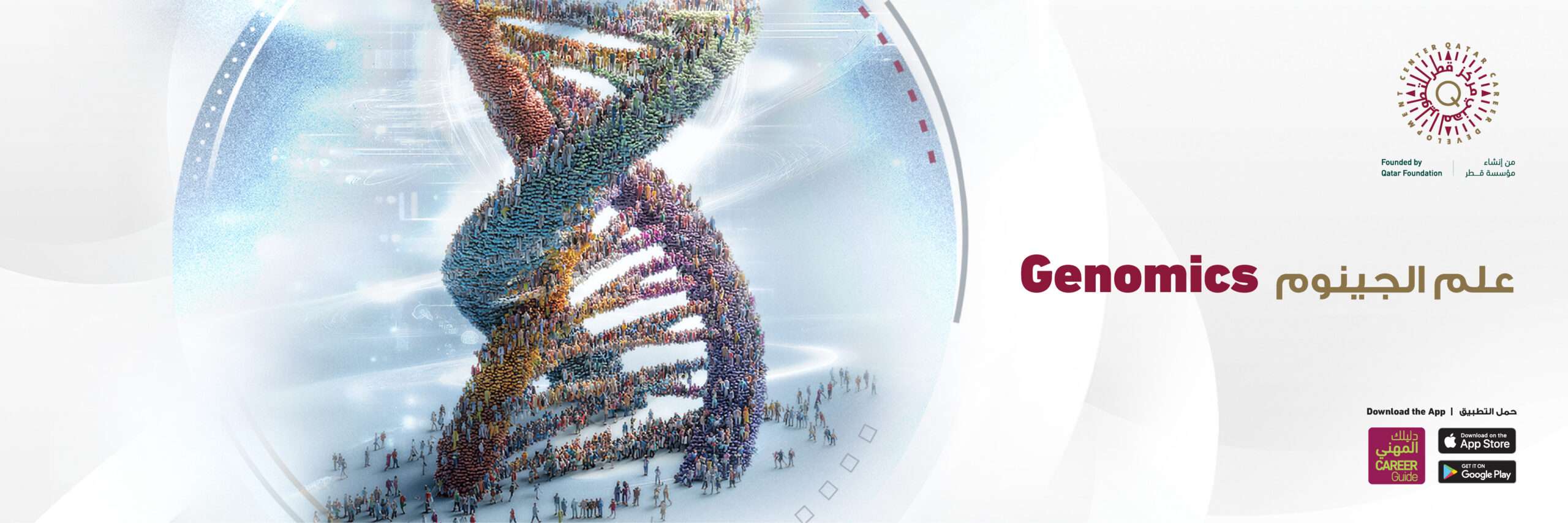
Imagine a world where we not only treat disease but also predict and stop it before it appears. A world where we uncover more of the human blueprint and better understand what makes us unique, so we can craft new solutions that transform health.
This is the promise of genomics today: a scientific revolution reshaping the face of medicine and deepening our understanding of life itself.
Genomics is closely linked to genetics within the broader field of molecular and cellular biology, which itself falls under the umbrella of biomedical sciences: disciplines focused on how the human body works at the levels of molecules, cells, and tissues.
To see the bigger picture, think of biomedical sciences as a bridge connecting research and medical practice, linking laboratory discoveries to clinical practice and even national health policy. They also include other core disciplines such as microbiology, immunology, biochemistry, hematology, histopathology, and cytopathology.
Genetics focuses on individual genes: what they do, the traits they carry, how those traits pass from one generation to the next, and how mutations can alter a gene’s function and lead to disease. Genomics, also called “genome science,” takes a wider lens. It studies all the genes in the body, numbering in the thousands, to understand how they work together, interact, and respond to the environment. This comprehensive view of genomics and its influence on health and disease makes it a pillar of precision medicine.
By integrating genetic data with a patient’s medical history, lifestyle, and environment, clinicians can diagnose faster and more accurately, tailor treatments to a person’s unique genetic makeup and even prevent certain conditions or lower their risk. Linking genetic variants to disease patterns strengthens prediction, supports new therapies for previously untreatable conditions, and ultimately improves both healthcare efficiency and societal productivity.
A Wide Range of Roles
You might ask: what exactly do genomics professionals do? Their responsibilities vary by job and workplace, whether in research, clinical, or policy.
Common tasks include DNA extraction; preparing sequencing libraries that record the order of genes in the genome under study; quality control on samples and data following specific standards and protocols; data analysis; and writing reports to interpret results in collaboration with physicians and specialists.
A Growing Field in Qatar
Qatar has steadily built a high-performance biomedical ecosystem with genomics at its core. For over a decade, Qatar Foundation has played a leading role in this development. It began with Qatar Biobank in 2012, established to collect bio samples linked to detailed health data. This was followed by the Qatar Genome Program to study the population’s genetic structure and accelerate precision-medicine applications. In 2024, the Qatar Precision Health Institute was launched as a national umbrella to unify genomics and precision-medicine research and build on Qatar Biobank and Qatar Genome outputs, speeding up translation from research to clinical practice. Together, these institutions are creating demand for researchers, clinical specialists, bioinformatics experts, technologists, and policy advisors; and opening meaningful pathways for students who love science to help shape the future of healthcare in Qatar.
Where to Start?
Qatar offers several academic pathways into biomedical sciences that can set you on track for a career in genomics. Hamad Bin Khalifa University also launched M.S. and Ph.D. programs in Genomics and Precision Medicine in 2017. Here is a list of relevant programs in Qatar:
Hamad Bin Khalifa University, College of Health & Life Sciences
- M.S. in Biological and Biomedical Sciences
- Ph.D. in Biological and Biomedical Sciences
- M.S. in Genomics and Precision Medicine
- Ph.D. in Genomics and Precision Medicine
Carnegie Mellon University in Qatar
- M.S. in Biological Sciences
Qatar University, College of Health Sciences
- M.S. in Biomedical Sciences
- M.S. in Biomedical Sciences
Info
From Cells to Genome
To better grasp genetics and genomics, it helps to revisit the basic biology of the cell.
Simply put, the human body is made of ‘cells,’ and inside each cell is a ‘nucleus’ that stores vital information in the form of ‘DNA.’
DNA carries your inherited traits as specific instructions encoded in ‘genes.’
Cells read and execute those instructions when they build ‘functional proteins’: the molecules that express traits such as eye and skin color and much more, according to the ‘genetic code.’
If a ‘mutation’ occurs—any change to the nature or position of a gene on the DNA—it can cause a malformation or genetic disease or raise susceptibility to a condition.
‘The genome’ is the full set of an organism’s genetic material, encompassing all its DNA.
Think of it as the complete library of instructions that cells follow, while a single gene is one book within that library.
#
Aisha Al Maadeed
Laboratory Technologist
Qatar Biobank
I’ve loved science since high school, and biology always felt like home. That early curiosity grew with time and led me to major in Biological Sciences at Carnegie Mellon University in Qatar. What pushed me from interest to commitment, though, were the health challenges I saw around me: diabetes, obesity, and other chronic conditions.
I realized that biomedical research could drive solutions with a real, human impact. Biology gave me the foundation; our community’s needs gave me a purpose. At university, I found a rich environment for learning by doing.
Joining Qatar Biobank gave me hands-on lab experience: DNA extraction, cryopreservation of Peripheral Blood Mononuclear Cells (PBMCs), and quality control across the sampling workflow.
Later, I took on responsibilities in biosafety systems, risk management, and quality systems. That wider vantage point showed me how many moving parts must align to produce reliable biomedical research.
My family’s support has been one of the biggest pillars of my journey. They noticed my love for science early on and encouraged me at every step, study decisions, internships, the works. That backing kept me motivated and helped me push through challenges. Speaking of challenges, they are a part of any career journey, of course.
My steepest learning curve was balancing highly detailed bench work with broader responsibilities like biosafety and risk oversight and management. It was overwhelming at first. I learned to plan my time with precision, seek advice from senior colleagues, and embrace a continuous-learning mindset.
What I love most about my job is that it has meaning and impact beyond the lab bench. When I extract DNA or validate quality systems, I know I’m contributing to large-scale projects that inform research and healthcare decisions. The field never stands still, and there’s always something new to learn.
I’m particularly proud of my work with the Qatar Precision Health Institute. Projects focused on biospecimen quality and risk management are vital because they protect the integrity of the data researchers rely on.
Contributing to population-health studies that can shape the future of care in Qatar is a source of real pride for me. For anyone considering this path: master the core technical lab skills and cultivate a sharp eye for detail. Equally important are critical thinking, problem-solving, and teamwork. You’ll draw on them constantly in class and on the job. On a personal level, curiosity and patience are essential.
Results don’t appear overnight, but the long-term impact is absolutely worth it. To students, I’d say: give biomedical science serious thought. It’s a field with a bright future in Qatar, especially with the country’s sustained investment in genomics and precision medicine. And opportunities aren’t limited to hospitals.
Research institutes, public health, pharma, and even entrepreneurship, all need people fluent in this space. Don’t overthink where to start. If science intrigues you, deepen that interest early through internships and hands-on experiences.
Volunteer in labs, join research programs, and let real work clarify your passions. Consider pairing biology with data science, business, or public health; that blend can set you apart and open more doors.