Calls for a New Wave of Innovation in Career Guidance and Counseling Services
CALLS FOR A NEW WAVE OF INNOVATION IN CAREER GUIDANCE AND COUNSELING SERVICES
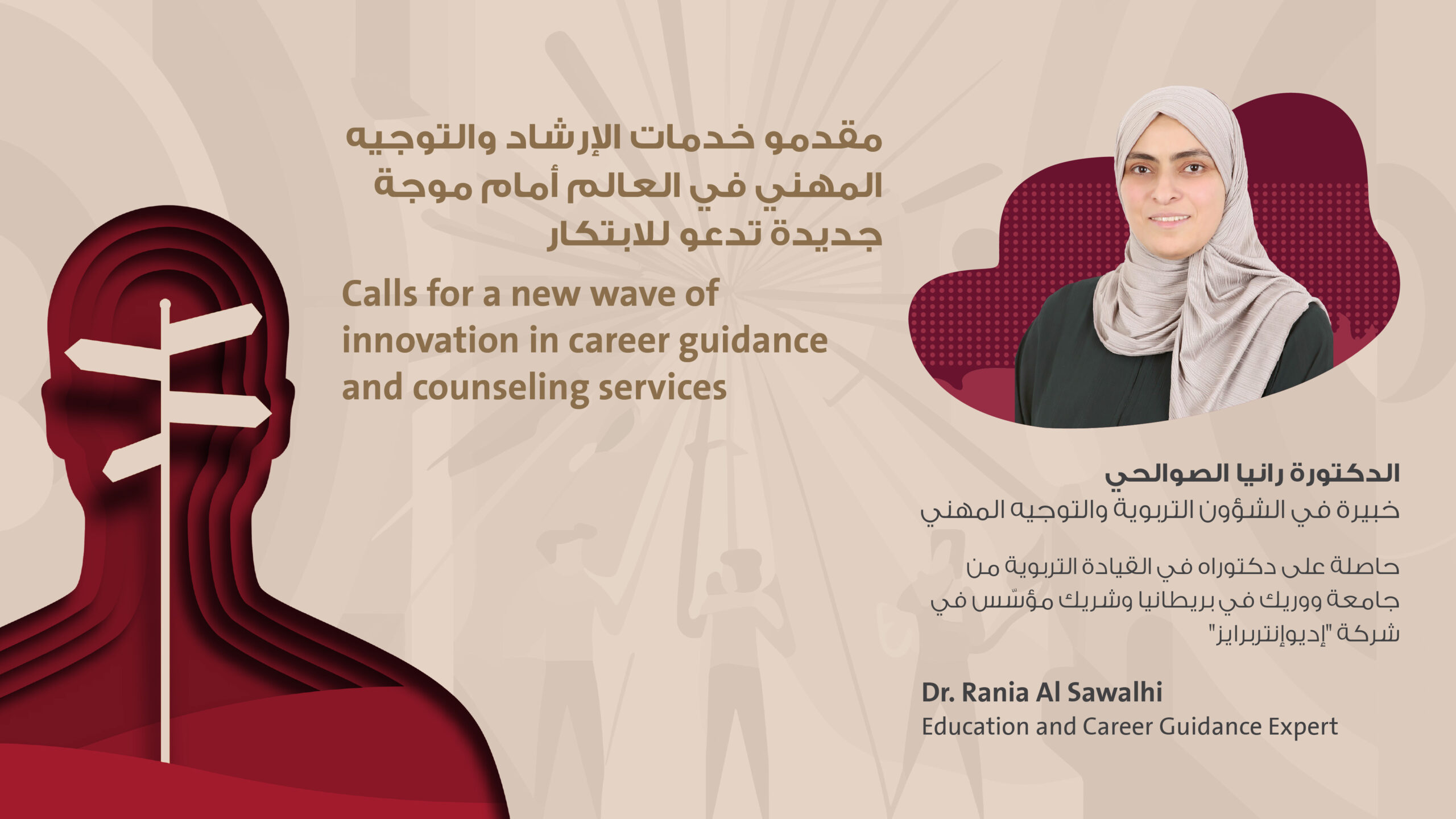
The world has witnessed numerous transformations centered around innovation, renewal, and revival in various sectors and fields, especially during the COVID-19 pandemic. As a result, voices advocating the redesign of educational and training opportunities have intensified, emphasizing the need to equip individuals to tackle challenges and focus on transferable skills and readiness for future professions.
Defining and identifying careers of the future is not a simple task, as current practices reveal. These careers may include traditional occupations revitalized through modern tools or professions that are linked to tourism and national identity requirements. They may also encompass careers that are entirely novel, particularly within the digital technology sector.
Undoubtedly, it is essential to connect the selection of future careers with a suitable system of career guidance and counseling. Despite the considerable advancements in the field of career guidance since its inception in the late 19th century, pioneered by the American Professor Frank Parsons, there is an increasing interest in reviewing the services and programs related to career guidance and counseling provided globally and locally.
This is to enhance awareness and understanding of the policies and practices in career guidance and to challenge practitioners and policymakers worldwide to consider the risks and opportunities that future will bring, integrating these ideas into career guidance policies and practices.
This notion is supported by a report issued by the European Training Foundation (ETF) in 2020, where several models from around the world were studied based on their innovative impact, such as the use of information and communication technologies, content management system development, community partnerships, the role of parents, positive impact guidelines, effective implementation, and the adaptability to different contexts.
When reviewing this report, it is important to note that these practices have been developed and tailored to address distinct challenges encountered by the career guidance systems in each country. Initiatives and models related to vocational education and training (VET), lifelong learning, and all types of service providers, including public employment services, schools, universities, and non-governmental organizations, have been observed. It has been also noticed that all the countries mentioned in the report offer career guidance systems in schools and universities, and the government supports vocational centers to assist unemployed workers and employees. Moreover, employed and working individuals have access to a wide range of services provided by numerous professional trainers and advisors. There is also, there is a government vocational rehabilitation system that supports people with disabilities in entering the workforce.
Considering all these examples elaborated in the detailed report, the focus should be on designing career guidance programs and services that prioritize the human element and their needs, also known as “Human Centered Design.” These programs and services should encompass personalization and consider that career guidance and counseling aim not only to secure employment but to enhance mental well-being, demonstrate the societal impact of individuals, and highlight their multifaceted roles that extend beyond a certain age. This way, individuals can unlock their full potential, pursue opportunities, or even create new ones for themselves.
Dr. Rich Feller, a professor of career guidance and development at the University of Colorado and past president of the National Career Development Association (NCDA), offers a unique model of innovation in career counseling services through revisiting and redesigning a set of specialized tools and programs. These tools explore human capabilities, interests, and inclinations, such as the ‘YouScience’ assessment program, which assists students in understanding their abilities and talents to match them with real-world job opportunities.
In 2021, Dr. Jaana Kettunen, Deputy Director of the Finnish Institute for Educational Research, conducted a study titled ‘Career Experts’ Conceptions of Innovation in Career Development.’ The study concluded that innovating in career guidance and development involves the introduction of new services, the creation of programs responsive to population needs and demographic changes, the development of governance and service standards, and investment in synergy and collaboration between sectors.
When discussing innovation, it is essential to mention the call for reevaluating and developing theories related to career guidance and counseling, or even developing a comprehensive theory from an Islamic perspective. There are also calls for reinventing assessment tools, incorporating various dimensions, particularly comprehensive human empowerment, considering the characteristics of different generations and their reliance on digital technology. This highlights the necessity of capitalizing on local and global digital advancements by providing platforms with worldwide and local information on key interests and values related to professions and self-guided choices for new specializations. This innovative journey can undoubtedly contribute to the development of services and programs, benefiting all sectors and individuals alike.
Dr. Rania Al Sawalhi
Education and Career Guidance Expert