ECOLOGY
ECOLOGY
Have you ever paused to wonder about the multitude of species that inhabit our planet? Scientists estimate that Earth is home to more than eight million species, yet only slightly over two million of them have been identified so far. All these living organisms coexist within Earth’s biosphere forming the web of life. Each organism, no matter how small or seemingly insignificant, plays a crucial role in maintaining the delicate equilibrium and biodiversity of our natural world. Understanding the connections between these living beings is fundamental to our survival, and this is where the role of the ecologist comes into play.
Ecology is a science that studies organisms in their natural environment. This includes studying how their behavior, abundance, and life histories are affected by their interactions with other species, their physical environment, and the climate. The levels of interactions are at the individual, population, or community levels. The field intersects with various other scientific disciplines, including biology, microbiology, botany, zoology, meteorology, geology, chemistry, and environmental sciences. Through the lens of Ecology, we gain deeper insights on the inner workings of the natural world. This understanding helps us devise better ways to preserve the biodiversity of Earth’s ecosystems and manage our natural resources sustainably.
The role of ecologists is diverse, shaped by their specializations and the projects they undertake. It may involve fieldwork, research, writing scientific reports, assisting in governmental policy development, and educating the public on environmental issues. For instance, some ecologists may study behaviors of animals in their natural habitats, while others could monitor plant growth under specific climate conditions, measure and evaluate the impact of urbanization on surrounding environments, or analyze the impact of pollution on aquatic life.
If nature is one of your passions, you should consider embarking on a career as an ecologist. Explore this field while at school. Engage in research, participate in science projects, or join a nature club. The Qatar Natural History Group offers a great opportunity to learn about Qatar’s natural environment through monthy talks and field trips.
Your next step should be pursuing a university degree in ecology or another branch of biology. A good starting point is checking Qatar University’s Bachelor of Science program in Biological Sciences. However, bear in mind that a career as an Ecologist like any other profession, is a commitment to lifelong learning. Its rewards, however, are immense. The thrill of exploration coupled with the knowledge that you are playing a key role in protecting our planet, is truly unparalleled. Your work may not be confined to laboratories or offices, it may often draw you closer to nature through field work.
Becoming an ecologist offers you opportunities to work in various settings like research, education, government organizations, NGOs, environmental consulting firms, and the sustainability departments of public and private enterprises.
Future prospects for ecologists look promising on both the global and local levels. Environmental sustainability stands at the core of Qatar National Vision 2030, and the country is home to several highly respected research institutions such as Qatar Environment and Energy Research Institute (QEERI) and the Environmental Science Center (ESC) at Qatar University.
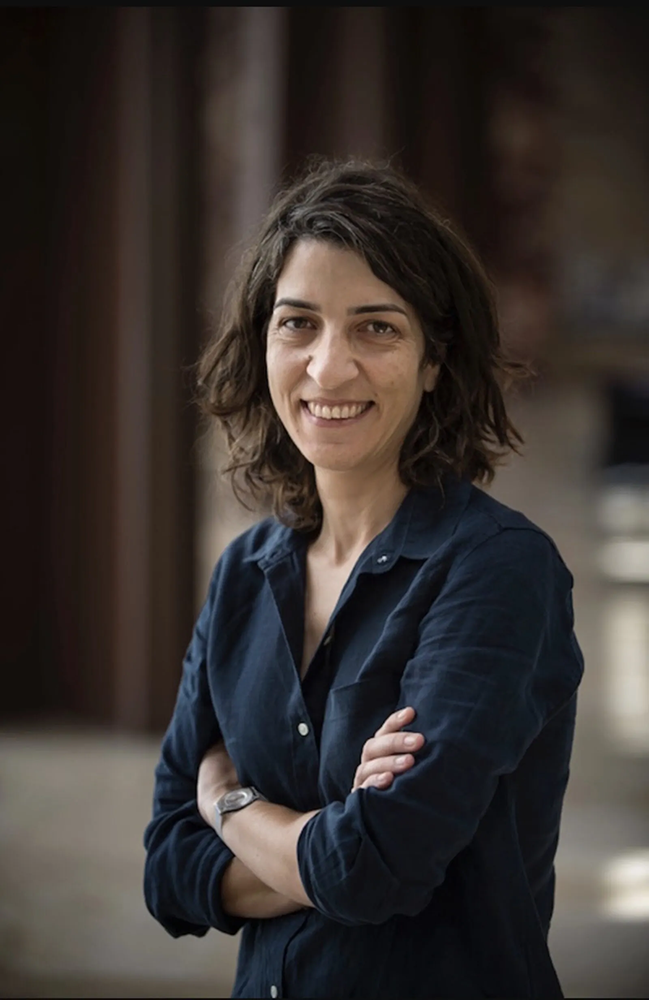
Dr. Aspa D. Chatziefthimiou
Ecologist and Environmental Consultant
Earthna and National Museum of Qatar
I journeyed into ecology because I love “big picture” work: understanding how all puzzle pieces fit together in nature. Starr, my dog, gave me the most valuable insight on this interworking because she understood nature innately! My family influenced me unknowingly, by always encouraging us to play outside. This is why I feel I belong in nature.
I was born in Greece but studied in the United States. In graduate school, I was intrigued to understand the behavior of bacteria that marked the beginning of biological life on Earth. To study them I worked in extreme environments: hot springs and deep-sea hydrothermal vents, since these are believed to be modern-day equivalents. Of course, you cannot study change through time across 3 billion years unless you do it under the evolutionary lens!
What I love most about ecology is that it brings me to nature. It’s a gateway profession offering endless possibilities to expand my horizons. Much like nature!
The desert, and its sea, mean the world to me! My career has flourished, and my network expanded in unprecedented ways in Qatar. As an ecologist, I took the leap from microbes to studying plant and animal communities as well. I became an expert in sustainability and conservation. As a human, I am always mesmerized by this country’s beauty and by how welcomed I feel!
I currently live and work in Qatar. At Earthna, I lead a team of experts to assess the state of ecology in Qatar, and draft policy for restoration and conservation for all deserts. I was also brought in by the National Museum of Qatar (NMoQ) to infuse ecological and sustainability aspects into their exhibitions. We also work together on the blueprint for setting up outdoor exhibitions in the most sustainable way.
Part of our work is to help people realize that climate emergency is an “everyone, everywhere, all at once” problem, here and now! We all need to put our hands together. Strive to do better. Do more. Having local ecological knowledge is key to making a difference locally! That’s why I am dedicated to outreach, educating the whole population, not just students, and turning nature visitors into stewards, with an agency to become part of the solution. Citizen science is another vehicle, so I co-developed the iNaturalist Projects: Q-Birds, Q-Plants, and Q-Wild-Nature. I encourage everyone to join.
My impulse when it comes to making scientific fields more attractive to students is to take each student by the hand, to show them how creative science is. How beautiful and exciting it is to make new discoveries. How awesome is the power of knowledge! Science is challenging yet that is part of the wonderful adventure. How can this misconception change? We need more representation in the media. More exposure to scientists. I don’t think that anyone has sat down with Jane Goodall and found her eco-adventures boring!
The future is bright for those who will choose a career in ecology in Qatar. There’s a lot to do, but there aren’t enough hands and minds to carry out ecological work. Moreover, regardless of the chosen career path, integrating sustainability into one’s profession is essential, and ecology serves as the cornerstone of sustainability. So, I see ecology as an integral part of not just ecologists. “Ecology lite” sort of a thing.
My advice to school students who are in the process of planning their careers is to ponder: what would I like to be thinking about for 40 hours a week? Where would I like to be spending that time? What is a challenge humanity faces that I would like to contribute to solving? If the answer is a career in ecology, students should know that no typecast exists for the profession nor a common skill set. I got my PhD to become a critical thinker and lead research teams. I chose fieldwork because I love being in nature. My next dream career move is to fundraise to buy land and in this way protect it. Other colleagues work on big data, remote sensing, policymaking, and teaching. If there is one skill that binds ecologists together is our unquenched love for nature!